Creating a Viable Farming Model for a Local Food System
by Eva Cahill and Gregory A. Georgaklis
Originally published in Biodynamics No. 267 (Winter 2009).
In 2001, after having just discovered Waldorf education, a wise kindergarten teacher handed us a brochure introducing us to biodynamic agriculture. We had spent years involved in both education and agriculture, so we gratefully embraced a new way of viewing life and growth that aligned with our perspective. Over the next two years we joined study groups; started a Waldorf early childhood program in the front room of our old farmhouse in rural Harvard, Massachusetts; transferred our older children to the local Waldorf grade school; and signed up for the year-long Biodynamic Farming and Gardening Program at the Pfeiffer Center with Gunther Hauk.
At the same time, we were managing a large horticulture family business that included conventional growing facilities in Massachusetts and New Hampshire. Like many in the industrial paradigm, our business was unsustainable inside a broken agricultural and economic model.
In 2005, we began the process of selling the business and transitioning to a way of life that fully supported our family values. We ended up conserving almost 800 acres of Merrimack Valley river bottom land just north of Concord, New Hampshire—an outcome that best served the local communities and our family. We were fortunate that the sale proceeds were sufficient to pay off the business debt. Unlike many conventional farmers who sell out, we broke even when the deal was done.
Biodynamic methods offer great hope for healing the earth and for the future of farming. We decided that rather than trying to change a broken system, we would create a new model that combines the wisdom of the past with recent innovations in sustainable initiatives. As husband and wife, with three strong, capable children, we committed to finding a community(1) and starting a farm based on biodynamic principles that would allow new paradigms for the business of growing food to emerge.
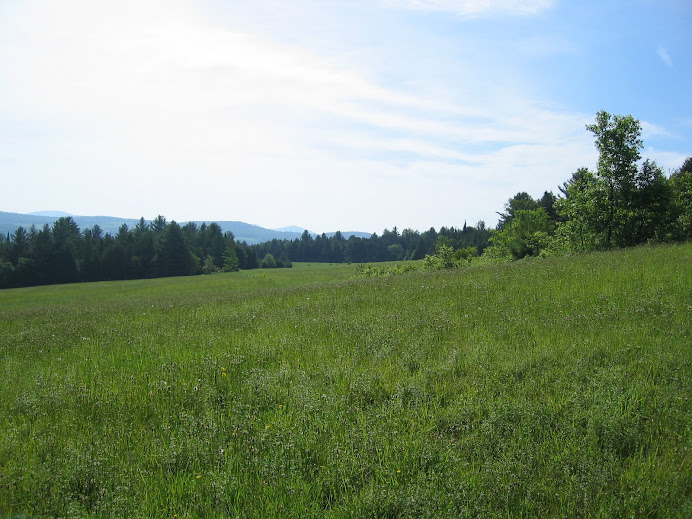
We have since relocated to the Montpelier, Vermont, area in a town that is supportive of an innovative farming model. The details of a farm purchase are being worked out, and as we live in a rental home nearby, we have started setting up. To date, we have cleaned and begun to retrofit the barn, built a permanent stirring station, started using the biodynamic preps, planted and harvested an experimental vegetable and herb plot, tilled and cover cropped two acres for a spring vegetable crop, and begun renovating the approximately seventy acres of both tillable land and pasture. Additionally, we have assisted the current owner with an application to the local land trust to conserve the farm, with the intention of purchasing the farm at agricultural value.
Although we have been eager to move to the farm and jump in with both feet, the delay has been fortuitous and enlightening for us. Starting a sustainable farming operation first involves establishing personal relationships in the community—with neighbors, potential funders and lenders, nearby farmers, community businesses leaders, town committee members, teachers, and town officials. Relationships with those who are both supportive and skeptical of our ideas are important. Fortunately, we have had the great opportunity to connect to many like-minded individuals.
We also had the good fortune to receive timely issues of Biodynamics, with articles by Robert Karp, Gary Lamb, John Bloom, and Hartmut von Jeetze, who fed us with thoughtful observations, questions, and words of wisdom. The articles in the Spring and Summer issues by Robert Karp were particularly timely for us, so we contacted Robert directly in September 2008 to request his final installment ahead of time. Our subsequent phone conversation was confirming; we were experiencing Robert’s insights first hand.
Our goal is to create a farm business model that produces high-quality food for the community in a way that is fully sustainable, economically viable, and replicable in any willing community. An additional goal is to create a model that is so successful it attracts the brightest and most capable young people to seek careers in farming.
The farm preservation movement has been highly effective in saving good land from development. What has been missing is a truly viable and economically sustainable small- to mid-sized farm model that would assure the productive use of that land for future generations. We believe farm success/viability is the only guarantee that good farm land will be stewarded by farmers and the only incentive for communities to learn to appreciate and value their agricultural resources.
All of us are witnessing the breakdown of the industrial, highly centralized food system, as evidenced by food contamination, recalls, and disease and fertility issues. During the past thirty years, we have seen something hopeful emerge with the advent and growth of various impulses in the sustainable farming movement. In the Summer issue, Robert Karp wrote about the use of capital for supporting the sustainable farming movement and put forward for consideration several ways to invest capital to support these efforts. What we would like to add to his suggestions is the development of a sustainable farming business model that serves as a foundation for a community-based local food economy.
We believe the only way to have a robust and safe food system is to decentralize and deliberately build community-scale, fully sustainable models and systems that produce and deliver a high percentage of local food needs from within a small geographic radius. The biodynamic model insists upon diversity as a basic tenet, and that diversity is one of its greatest strengths. Self-sustaining inputs and increasing fertility insulate it from the unpredictable swings of input costs that industrial farmers have suffered over the past years. And the scale is always appropriate and sustainable; it is limited by definition to the capacity of the land and the farmer. As in nature, a diversified system (such as a diversified biodynamic farm or many thousands of local food economies that are farm based) is nearly immune to wide spread breakdowns and provides the ultimate in food security.
A key component of our plan is to wed a sustainable business model to the biodynamic farming system, both of which are based on principles of holistic interconnectedness rather than mechanistic reductionism.
Our plans include the following steps, the first of which we have begun.
Years 1 and 2:
Experiment with and develop this model. Start small. Grow two acres of vegetables, milk two cows, start a beef herd with grass-based genetics, keep two hives of local bees, start a small laying operation, continue to prune and care for an apple orchard, make and use the biodynamic preparations. Develop our own preparations and other methods to enliven and reconnect the soil and plant life. Let the business grow organically; hire as needed and very carefully. Continue conversations with neighbors, and the local school, the local small retail stores regarding sales and collaboration. Sell raw milk as legislation allows. Depending on the requests of both our customers and the demand of our time/efforts, further prepare food.
Years 3-5:
Grow the model in a conscious way so that we feed a small geographic area around the farm. Watch and learn. Invent and create new ways to meet the needs of the community. Observe and integrate systems on the farm with the goal that each component works synergistically to make a harmonious whole, supporting each other in reducing costs and increasing quality. Grow the farm to the estimated sustainable capacity of feeding 200 families.
Years 6-9:
Create rigorous and systematic training programs to train individuals in how to create, manage, and sustain this mission-driven community-oriented farm model. Train new and experienced farmers in biodynamic and other holistic farming methods as well as sound business management. Additionally, train farmers to develop and build their intuitive skills as a management tool.
Years 10+:
Assist graduates in locating and securing a farm in a community that wishes to set up its own local food system. Additionally, generate and source capital resources that support replication of this model. We would assist and support graduates and willing communities in that process to ensure success.
It is now essential for various sustainable farming impulses (and capital that understands the structure and needs of sustainable agriculture) to come together to create viable models that will stand ready to replace industrial agriculture.
This article is a call to action to the biodynamic community to prove out a model that is replicable in other willing communities. A successful model must have specifically measurable metrics that would define success:
100% of the farm’s products are sold to the surrounding geographic community, such as the valley, village, town, local school system, neighborhood, etc.
The farmer is earning a competitive income that reflects the skills, effort, and time required for the job, relative to the marketplace.
This model attracts highly skilled individuals.
The farm is a self-sufficient system with constantly increasing fertility—with little to no import of fertility.
The farm makes full use of economies of synergies between different stacked enterprises as measured by lowered input costs and increased quality.
The farm enterprise is profitable while maintaining and improving the quality of its fixed resources (increasing economic fertility).
The farm maintains its natural resources so they are sustained, stewarded, and productive indefinitely.
The farm structure and enterprise is consciously designed to be an essential and everlasting part of the community.
The metrics and benefits stated above are inherent in biodynamic farming, and the model would be adaptable to fit a diverse mix of farm resources, geographic locations, and demographics. At its core it would serve as a foundational economic engine that supports other local economic activity, such as retail food stores, inns and restaurants, food processing (from slaughter to food preservation), delivery and distribution—all the components that make up a local food economy. We believe our goal, as farmers, is to feed a much broader segment of the local population. The task of this model is to make it nearly effortless for people to obtain excellent locally produced food.
Rudolf Steiner gave us a remarkable gift through his insights, experiments, and lectures. He gave the gift freely, with no conditions other than to use it, experiment, and evolve the methods through our daily practice. In his day, farming at a human scale was economically viable; since that time, with the dominance of industrial agriculture, the knowledge and desire to create human-scaled farm business models has been mostly absent. The Biodynamic Farming and Gardening Association can best preserve the integrity and quality of biodynamic methods by supporting the development of a benchmark farming model that sets the standard for all others. Otherwise, we will not have sustainable systems, and these outstanding methods will simply be discounted as a throwback or quaint dream for gentleman farmers—or simply as added marketing value for expensive niche products. In addition to the great work that has been done to develop biodynamic methods, we must integrate these methods into a successful economic model to ensure sustainability.
As mentioned earlier, we have witnessed many of the issues that Robert Karp wrote about in his recent article on making capital available for sustainable farming. Our own experience has shown us that state and local funding sources for sustainable agriculture are willing to support export-oriented models that produce high-end products for wealthy urban markets, but they do not have confidence that local communities can support economically viable food systems.
Our model is not a fast-growth investment with a high-profile appealing brand, nor a product with high-end niche marketing potential, such as artisanal cheese or other gourmet food products. A truly local model should grow slowly, carefully, consciously, and organically. Mission-driven farming projects such as this—conservative and sustainable agricultural business models—tend not to be attractive to the funding sources currently available, which seek rapid growth or scalable returns/growth potential.
The capital that is necessary to bring these models into reality will largely come from the communities in which they are located. This should happen for many reasons, not the least of which is that healthy economic transactions occur when people have personal relationships and common economic interests. A local farm-based food economy benefits the local community on many levels. Unlike an export-based farm model, the local community receives, in addition to jobs and land preservation, actual goods and services that it previously imported from outside the community. Local investment in local food economies is an investment in infrastructure and economic activity in which the investor has a direct interest and connection. There is nothing speculative or abstract about this risk/reward scenario.
For our particular project, the process of proving out the initial model will take longer and cost more than subsequent replications. Since this is an experimental model, we will need to tap outside capital resources in addition to community resources. Our goal is to fund this project with one third of investment or loans coming from community resources, one third from foundations, and up to one third through traditional financing or interested individuals from outside our community.
This proposed model is certainly not the only attempt that is being made to create replicable business models that integrate sustainable farming methods with sustainable business practices. We would like to collaborate with farmers, business people, and capital resources as we experiment and create viable farming models that stand ready to replace industrial agriculture with healthy nutrient-dense food processed and delivered directly to customers in a manner that nourishes community. It is our hope that these models will bring together many of the successful initiatives that have inspired us. Embedded in our model is the remarkable development of community supported agriculture (CSA). To build on the CSA concept, we hope to reach an even broader segment of our community by offering more service-oriented selections of food that make the farm and local food economy a seamless extension of each household’s kitchen. With additional service and flexibility, we hope to reduce the amount of turnover often associated with CSA membership while, as a farm and business, taking full responsibility for matching our production to our customers’ needs and desires.
Further initiatives or methods that have been integrated into this proposed model are holistic management, grass-based farming, permaculture, and traditional organic farming methods, all of which provide healthy ways to view the farmer’s and community’s relationship to the land and food production. All of these methods have made enormous contributions to the evolution of this model, as have the many pioneers who challenged conventional wisdom and peer pressure to create new models and rediscover old rules. We humbly owe them gratitude and honor. We are building on their successes and learning from their failures—and it is critical that we continue to learn from and evolve each of these impulses.
In summary, we wish to create farming models where communities can feed themselves. Additionally, we seek funding and financial resources at the ready to take advantage of the opportunities that will come as industrial agriculture breaks down and an informed populace seeks healthier and safer food.
Let’s create farming models designed to serve local communities with much, if not all, of their food. And by doing so, let’s create joy, health, employment, collaboration, and a deep connection to the land through the food we eat.
Note
1. We use the term community as Wendell Berry speaks of it in the collection of essays Sex, Economy, Freedom, and Community. “If the word community is to mean or amount to anything, it must refer to a place (in its natural integrity) and its people. It must refer to a placed people.” This definition stands in contrast to the currently loose use of community to refer to a network of people with similar interests, occupations or associations that are not tied to a specific geographic location.