“Nothing happens in living nature that is not in relation to the whole” Goethe
Thank you for your interest in Verdant Valley. Our goal is to create a self-sustaining food system that can be replicated in other New England communities. This system is based on a foundation of altruistic ecological, economic and social values that support community, and the farming model that supports this system exists in a new paradigm for agriculture that focuses on the synergies of natural systems.
During the past four years, as we transitioned out of a large conventional farming and horticulture operation in Massachusetts and New Hampshire, we searched for a New England farm and community that would support the testing of a farming business model that would meet all of the following criteria:
the land is stewarded for future generations
the soil is enhanced
the food is vital, dense and nourishing
the farm feeds its neighbors in the community
business transactions occur between people that know each other
the farmers and laborers earn sustainable incomes
farming is an attractive career choice for young adults
the community is connected to the land through food
and money spent on food is kept in the community
We know these criteria can be met by a farming business model that is balanced and holistically managed, but only if we learn from our history, examine our underlying assumptions, and create something new that is transformative. In other words, our current ways of doing business and of farming need to be reexamined and replaced with a new set of rules that are entirely community and resource based.
We chose two words that embody our vision:
verdant
adjective
· (of countryside) green with grass or other rich vegetation.
· of the bright green color of lush grass: a deep, verdant green.
valley
noun
· a low area of land between hills or mountains, typically with a river or stream flowing through it.
We added to the definitions, putting the words in context for this project.
Verdant is the life giving quality that is the source of health and wellbeing. It is the color of new spring growth and the green of land that is stewarded for future generations. It is expansive and vibrant.
That expansive impulse is contained and focused in a Valley, which is our food shed, our watershed, and community itself - a humanly scaled collection of families and all they need.
Verdant Valley LLC was established in March, 2008 and a mission emerged:
Verdant Valley is dedicated to revitalizing food, the land, farming, and community life by creating a self-sustaining and replicable local food model.
Our specific goals are to:
Establish a grass-based diversified farm that utilizes biodynamic as well as other sustainable farming practices,
Supply raw and prepared nutrient dense food to our neighbors, year round, as an extension of each household’s kitchen.
Provide high service, convenient distribution, and partnership with local grocers, other business and local schools.
Feed as much of the town of Calais as possible, in a sustainable way, given the finite resources of the farm.
Train other farmers and community members who are interested in replicating this model.
This is a novel paradigm for the business of farming in the new millennium, but is based on knowledge that was once second hand to craft farmers here in Vermont. We will focus on the quality of production, service to others, and the continuous pursuit of craftsmanship, and profit will be a natural by-product and only one of the many measures of success.
The traditional measure of success for business has been constant growth. The traditional growth model, however, is no longer viable because constant growth is impossible in a finite world. In this model we see an initial growth period, then a finite amount of production and sales based upon the natural resources of the farm. At the same time, the diversity on the farm allows the operation to remain financially self-sufficient, profitable, and stable. This farming model anchors the community and provides real food security.
Our work grows out of several pioneering movements and we acknowledge the work that has come before us, including organic and biodynamic agriculture1, community supported agriculture2, the local and slow food movements3, and associative economics4. In addition, our work is informed by the research of nutrition pioneer Dr. Weston Price5, the insights of Rudolf Steiner6, and the writings of E. F. Schumacher7 and Wendell Berry8. Based on the contributions of these individuals and movements, combined with our own life experience, Verdant Valley is a natural evolution towards an increasingly holistic model for feeding a community.
This is not an idealistic notion or fantasy, but is wholly pragmatic and essential to our evolution as people. As Rudolf Steiner said almost 100 years ago, “without more nutritious food our evolution will slow and stop and we as a species may never reach our potential.” His prediction has largely come to fruition, and our societal woes can be correlated to the plummeting level of vitality and density of the food we eat. All the evidence was given to us when Dr. Weston Price did extensive field research 60 years ago that clearly proved that an industrial western diet caused disease and malformation. Yet we have further promoted that diet, and sadly, it has become accepted as a global benchmark for prosperity.
Key to this model is an integration of relationships on the farm and in the local economy that complement and enhance one another. These synergies create benefits for everyone involved; they work together to increase quality and output, and reduce inputs and costs. This model stands in stark contrast to conventional farming and business models that rely on economies of scale to drive profit and productivity, and compromise sustainability and the proper care of all living things.
Verdant Valley is not a model that wishes to turn back the clock to a simpler time. This model fully supports the appropriate use of modern technology and believes selected technologies can be used to enhance the goals and values of environmental and economic sustainability. We also believe in the appropriate scale of each piece of the model, so that the lives of the farmers, customers, laborers, livestock and other members of the community, on and off the farm, are enhanced.
To date, the following progress has been made. We have located a community and farm in which to create this model. We chose the town of Calais, VT, which includes the villages of Adamant, Maple Corner, East Calais and North Calais. These communities are supportive of locally grown food, are accepting of and understand agriculture, and embrace the essential nature of community life.
The proposed farm, a typical Vermont hilltop farm, is located between the villages of Adamant and Maple Corner. It is well suited for the creation of this farming business model for many reasons: it is an ideal size, with a total of 220 acres, 80 of which are open, and 15 of which are high quality tillable soils; the barn is in excellent condition, and other buildings are in good condition; the soils are unusually good for this area and would support the model; the farm could be certified organic without delay and the property is surrounded by an additional 150 acres of neighboring pasture that could be grazed and hayed.
We see this model developing in several phases:
Phase 1
Raise capital in the form of loans, investments and grants to purchase property, equipment and livestock. Ease the property with the assistance of Vermont Land Trust and Calais Conservation Commission to generate working capital. Organically grow the farming business to a self-sustaining level to produce a superior mix of dairy, meat and vegetable products tailored to the land and the community’s needs. Establish a loyal and local customer base.
Phase 2
Add value to the food and service: raw products will be further processed by community partners or by the farm itself, and the distribution system will be enhanced to meet the needs of a more diverse local customer base.
Phase 3
Establish a training program for future farm managers and owners, and begin replicating this model in other interested communities.
For more information, please contact us. We look forward to hearing from you.
Eva Cahill eva@verdantvalley.com and Greg Georgaklis greg@verdantvalley.com
Verdant Valley LLC
P.O. 2
Calais, VT 05648
802.229.9402
NOTES
Biodynamic agriculture. Shortly after WWI, a group of farmers in Germany, concerned with the decline of their soil and plant vitality, sought the advice of Rudolf Steiner who had spent his life researching and investigating the forces that regulate life and growth. Steiner began a series of experiments with a small group of farmers in 1922, and gave a series of lectures and workshops in 1924. There he laid down some fundamental principles that pioneered a return to regenerative and ecologically farming practices that had been lost during the time of industrialization. The biodynamic farm is seen as a self-sufficient entity that produces all of its needed inputs and fertility. Soil health and enhancement for future generations is at the heart of the biodynamic approach. Practices include cover and multi-cropping, integrated animal production, crop rotations, and specially formulated “homeopathic” preparations for the soil, plants and compost.
Community Supported Agriculture or CSA consists of a community of individuals who pledge support to a farming operation so that the farm becomes the community's farm, with the growers and consumers providing mutual support and sharing the risks of food production. CSA’s focus is usually on a system of weekly delivery or pick-up of vegetables and fruit (sometimes dairy products and meat).
The Local Food Movement is a collaborative effort to build more locally based, self-reliant food economies and is considered to be a part of the sustainability movement. It supports a preference to buy locally produced goods and services. Those who prefer to eat locally produced food sometimes call themselves localvores or locavores. The Slow Food Movement was founded in Italy to combat the spread of fast food franchises. Its mission is to preserve cultural cuisine, and the plants, seeds, livestock, and farming within a particular region.
Associative Economics constitutes a new paradigm in economic thinking and describes a way of understanding modern economic life as a next step after market economics. It stems largely from the insight of Rudolf Steiner’s 1922 course in economics and describes a landscape in which human beings collaborate rather than compete in order to best serve humanity. In an associative economic model, businesses are set up to “serve human ends, rather than human beings serving their ends”. (From Transforming Capital in the Sustainable Food Movement, by Robert Karp, Biodynamics, Summer 2008)
Dr. Weston Price (1870-1948) was an American dentist who studied isolated non-industrialized peoples to establish parameters of human health and the optimum characteristics of human diets. His research demonstrated that humans achieve perfect physical form and perfect health generation after generation only when they consume nutrient-dense whole foods. In 1939, he published Nutrition and Physical Degeneration, a detailed presentation of his nutritional studies.
Dr. Rudolf Steiner (1861-1925) was an Austrian scientist, philosopher, literary scholar, artist, architect, and founder of Anthroposophy. During his prolific life, he gave over 6,000 lectures, wrote dozens of books, and created innovative approaches to agriculture, economics, education, medicine, and the arts. He also developed an approach for working with people with special needs, and a methodology for spiritual development.
E. F. Schumacher (1911-1977) was a British internationally recognized economic thinker. He served as Chief Economic Advisor to the National Coal Board for two decades. His ideas became well known during the 1970s after the publication of Small is Beautiful. He is best known for his critique of Western economies and his proposals for human-scale, decentralized and appropriate technologies.
Wendell Berry (1943-) is an American writer, poet, cultural and economic critic and farmer. His non-fiction work covers a breadth of topics, including sustainable agriculture, appropriate technologies, healthy rural communities, connection to place, the pleasures of good food, husbandry, local economies, reverence, and the interconnectedness of life. He believes that threats to a good life include industrial farming, violence against others and the natural world, and the eroding topsoil.
skip to main |
skip to sidebar
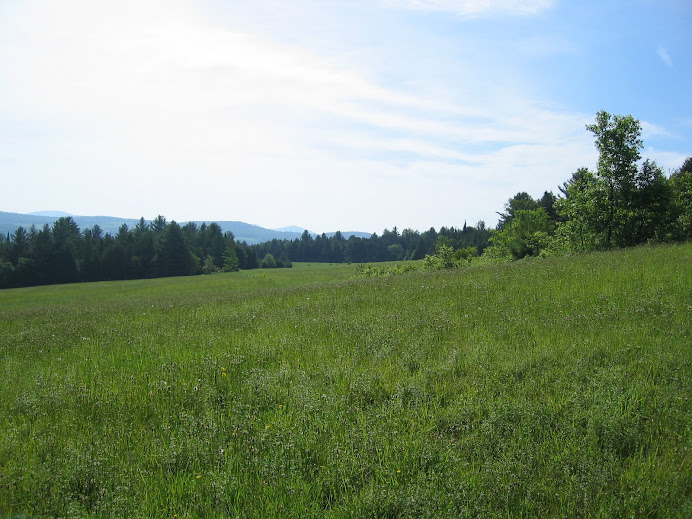
Verdant Valley is a Biodynamic Farm in Central Vermont that is creating and testing a viable business model for small scale farming that is profitable, as well as uncompromisingly sustainable enviromentally, socially, and economically. This Blog will report our progress as we move this glorious project forward.

Verdant Valley of Vermont
Verdant Valley is dedicated to revitalizing food, the land, farming, and community life by creating a sustainable and replicable local food model.
"Nothing happens in living nature that is not in relation to the whole" - Goethe
"Nothing happens in living nature that is not in relation to the whole" - Goethe
Bliss Farm - Calais, Vermont
